
Apple could be on the verge of introducing its first touchscreen MacBook Pro during a media event scheduled for October 28, 2026. This launch is expected to introduce one of the most substantial redesigns in the laptop’s history, combining an updated chassis with Apple’s inaugural OLED display and a potential Dynamic Island camera cutout. If these reports prove accurate, the update represents a major shift in Apple’s historical opposition to touch-enabled laptops.
Speculation regarding a touchscreen MacBook Pro intensified after Bloomberg’s Mark Gurman reported in 2023 that the company was actively exploring the concept. Over the subsequent three years, reports indicate that Apple has successfully resolved previous technical and manufacturing hurdles. The timing aligns with the 20th anniversary of the MacBook Pro, marking the milestone by introducing a capability previously absent from the Mac ecosystem. Furthermore, touch support is anticipated to establish a clearer distinction between the MacBook Pro, the MacBook Air, and the entry-level MacBook Neo.
Pricing and availability details remain uncertain due to supply-chain pressures and the higher manufacturing costs associated with OLED panels. Initial configurations with touch capabilities are expected to remain exclusive to high-end professional models powered by M5 Pro and M5 Max processors. Meanwhile, Apple is preparing a standard 14-inch M6 MacBook Pro that will retain the traditional design.
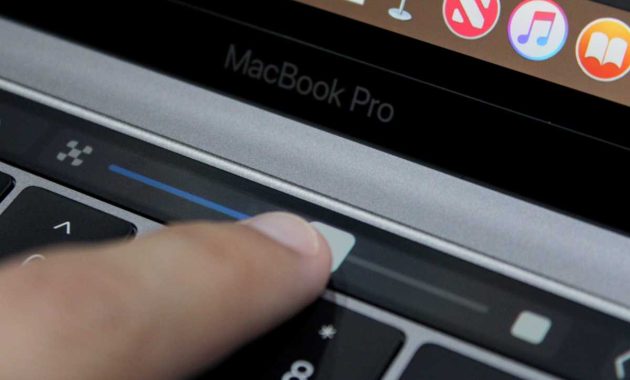
Touchscreen MacBook Pro release date: When will it launch?
Apple officially confirmed a media event named “Pro and Tell” for October 28, 2026, which is widely expected to serve as the launchpad for the touchscreen MacBook Pro. Bloomberg’s Mark Gurman reported that the hardware reveal will take place during an online video presentation accompanied by an in-person press event, with commercial shipments reportedly beginning on November 6, 2026.
Earlier forecasts pointed to a broader launch window, with initial estimates suggesting a debut in late 2026 or early 2027. Supply-chain constraints and adjustments to Apple’s chip roadmap previously raised the possibility of delays, leading the company to target M5 Pro and M5 Max processors instead of the M6 generation to maintain the development schedule. Additionally, South Korean industry sources noted that Samsung initiated production on an 8.6-generation OLED manufacturing line capable of supplying panels for these next-generation devices.
Which MacBook models will get a touchscreen?
Industry analysts Ming-Chi Kuo and Bloomberg’s Mark Gurman have both indicated that the initial rollout of touchscreen technology will focus strictly on the professional lineup. The first devices to feature direct touch input will be high-end MacBook Pro models equipped with Pro and Max chips. This hardware exclusivity serves to differentiate the professional tier from more affordable consumer offerings like the MacBook Air and the MacBook Neo.
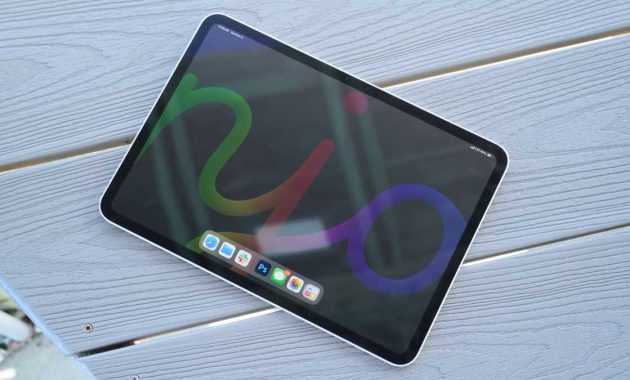
Unconfirmed industry rumors suggest Apple might also explore rebranding its flagship laptop as the MacBook Ultra to extend its existing branding strategy. However, this potential rebranding lacks corroboration from primary supply-chain analysts. Current forecasts suggest that the MacBook Air will not adopt touchscreen functionality before 2028 or 2029, though it may receive an OLED display upgrade prior to gaining touch support.
Touchscreen MacBook Pro Design
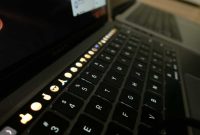
The upcoming touchscreen MacBook Pro is anticipated to feature a substantially lighter chassis achieved by consolidating and redesigning internal components, though overall thickness may remain comparable to current models. Visual modifications include the potential removal of the traditional display notch in favor of a hole-punch camera cutout. Some reports suggest this cutout could integrate an iPhone-style Dynamic Island interface.
Despite the addition of touch capabilities, the device will retain its conventional laptop form factor rather than transitioning into a hybrid tablet. Additional hardware adjustments include a reinforced hinge designed to minimize display movement during physical interaction. These combined modifications aim to modernize the MacBook Pro while preserving its productivity-focused architecture.
Which chip will feature in the touchscreen MacBook?
Initial expectations pointed toward the inclusion of M6 Pro and M6 Max processors, but recent industry reports indicate that Apple adjusted its roadmap to feature M5 Pro and M5 Max chips instead. This adjustment reportedly accelerates the development timeline for the AI-focused M7 generation. Rising memory costs and ongoing DRAM and NAND shortages may have also influenced manufacturing and pricing considerations.
Concurrently, Apple is preparing a 14-inch MacBook Pro running on the standard M6 chip. Speculation has also surrounded the potential introduction of an in-house 5G cellular modem, though concrete evidence confirming cellular connectivity for the initial touchscreen release remains limited.
Touchscreen MacBook Display
The integration of a tandem OLED display represents a central upgrade for the redesigned MacBook Pro. This advanced panel technology combines two distinct OLED layers to deliver higher brightness levels, deeper blacks, increased contrast ratios, and enhanced energy efficiency compared to existing mini-LED screens.

Touch functionality will utilize on-cell touch technology, embedding touch sensors directly within the display structure to maintain a thin profile without requiring an extra overlay. Both 14-inch and 16-inch configurations are expected to adopt this hardware configuration, marking the most substantial display overhaul in the history of the product line.
Touchscreen MacBook Interface
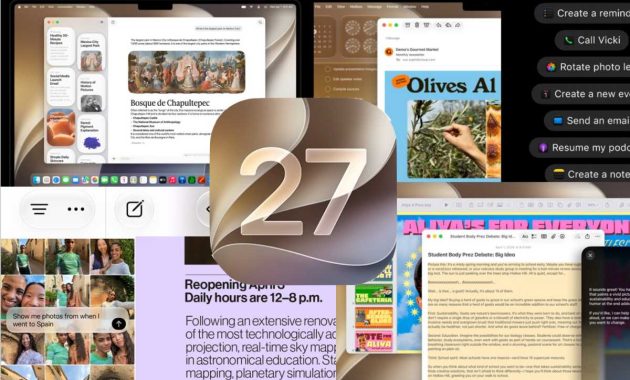
Rather than replacing macOS with iPadOS, Apple is reportedly developing a touch-tuned interface for macOS 27 that dynamically adapts to user input methods. When touch input is detected, interface elements such as menus and buttons enlarge automatically to facilitate accurate tapping, while returning to standard point-and-click layouts during mouse or trackpad use.
Beta releases of macOS 27.2 have included code references and interface behaviors that support touch navigation. Specifically, Safari interface elements such as tabs exhibit responsive lifting and resizing behaviors during touch interaction, alongside contextual menus tailored for touch input.
Touchscreen MacBook Pro: Connectivity
Beyond display and chassis updates, rumors have explored the possibility of built-in cellular connectivity derived from Apple’s proprietary C-series modem development. Internal Apple code referencing an M5 Pro MacBook Pro paired with a C1 modem indicates prior experimentation with cellular hardware.
The laptop may also incorporate Apple’s evolving N-series networking components to handle Wi-Fi, Bluetooth, and Thread protocols. These proprietary wireless chips are intended to replace third-party components gradually, improving power efficiency across the broader ecosystem.
Touchscreen MacBook Pro: Price expectations
The introduction of tandem OLED panels and redesigned internal hardware is expected to command a price premium over existing models, reflecting similar pricing adjustments seen during the transition of the iPad Pro line. Current standard configurations of the M5 MacBook Pro reflect baseline pricing established following recent market adjustments.
| Model Size | Processor and Specifications | Price (USD / GBP) |
|---|---|---|
| 14-inch MacBook Pro | M5 (10-core CPU, 10-core GPU, 16GB unified memory, 1TB SSD, Thunderbolt 4) | $1,999 / £1,999 |
| 14-inch MacBook Pro | M5 Pro (15-core CPU, 16-core GPU, 24GB unified memory, 1TB SSD, Thunderbolt 5) | $2,499 / £2,499 |
| 14-inch MacBook Pro | M5 Max (18-core CPU, 32-core GPU, 36GB unified memory, 2TB SSD, Thunderbolt 5) | $4,099 / £4,099 |
| 16-inch MacBook Pro | M5 Pro (18-core CPU, 20-core GPU, 24GB unified memory, 1TB SSD, Thunderbolt 5) | $2,999 / £2,999 |
| 16-inch MacBook Pro | M5 Max (18-core CPU, 32-core GPU, 36GB unified memory, 2TB SSD, Thunderbolt 5) | $4,399 / £4,399 |
As Apple prepares for the official introduction of its upcoming hardware, the anticipated touchscreen MacBook Pro stands to redefine the professional laptop lineup through advanced display technology and interface adjustments.