
Apple has influenced everything from unibody laptop cases to high-res screens.
The dream of a truly portable Mac is almost as old as the Macintosh itself. Five years after the debut of the original Macintosh desktop in 1984, Apple launched the disastrously expensive, 16-pound Macintosh Portable, which failed quickly. Out of the ashes came the PowerBook 100 in 1991, followed by the more refined PowerBook 500 and PowerBook G3 in 1994. Apple finally struck mainstream consumer gold with the colorful iBook G3 in 1999, featuring a small handle and an adorably rounded case. It wasn’t exactly fast, but it was a clear sign that Apple was aiming to make computers that appeal to the masses.
Many users fell in love with Apple hardware early on, such as entering college in 2001 alongside classmates using the gorgeous PowerBook G4. That machine featured a sleek titanium case and an operating system that seemed lightyears beyond Windows XP. When Apple announced the first MacBook Pro in 2006, it improved on the PowerBook G4 in every way, and the computing world hasn’t been the same since.
No matter what people think of Apple or its hardware, there’s no doubt that MacBooks have been the defining laptops of the last two decades. PC makers rushed to ape the MacBook Pro’s sleek unibody design, and the introduction of the MacBook Air spurred on the creation of ultraportable laptops. Apple experienced missteps along the way—the first MacBook Air was too slow, and later models removed crucial ports from the MacBook Pro—but even those served as learning lessons for the entire PC industry.
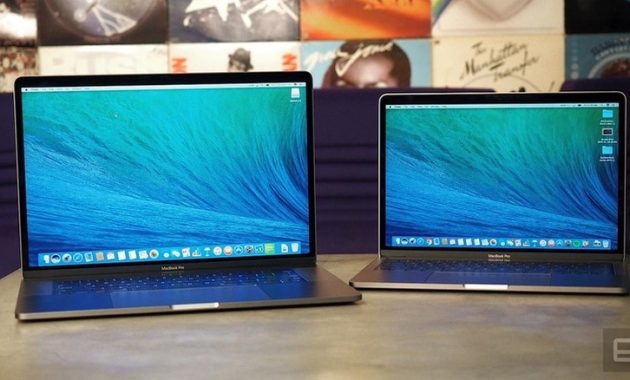
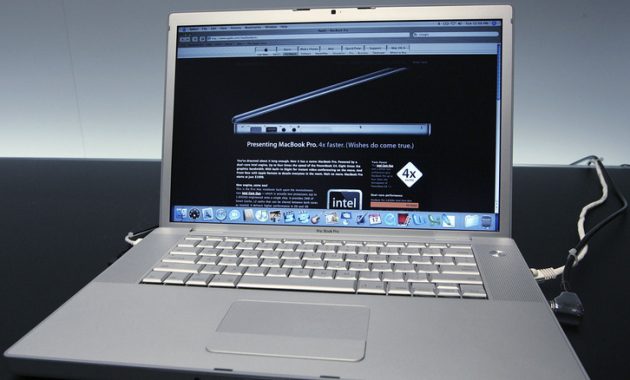
One of the first major stories Engadget covered back in 2005 was Apple’s switch to Intel CPUs, moving away from the PowerPC chips it relied on for years. That made the first MacBook Pro and MacBook, as well as the revamped iMac, intriguing systems when they arrived in 2006. They weren’t just spiffy new Macs, they were a sign that Apple was now directly competing with PCs using the exact same Intel Core Duo chips.
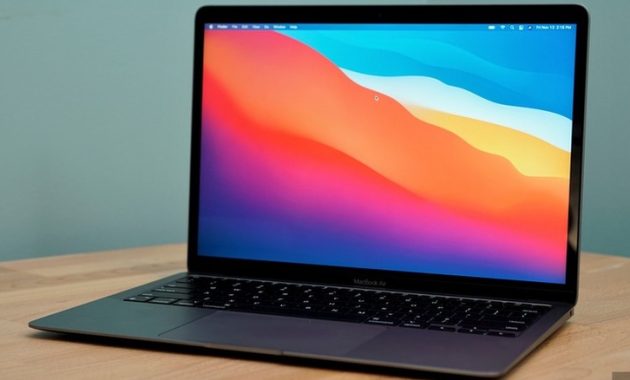
For the most part, the MacBook Pro and MacBook were another sign of Apple’s design prowess and a warning to the entire PC industry. The MacBook Pro was a slimmer and more refined version of the PowerBook G4’s aluminum case, while the PowerBook carried over a similar aesthetic to a plastic frame. At the time, most PC makers focused on less exciting and more utilitarian designs. Sony was a rare PC company leaning into a premium aesthetic with its VAIO systems, but they were also notoriously slow and expensive.
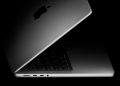
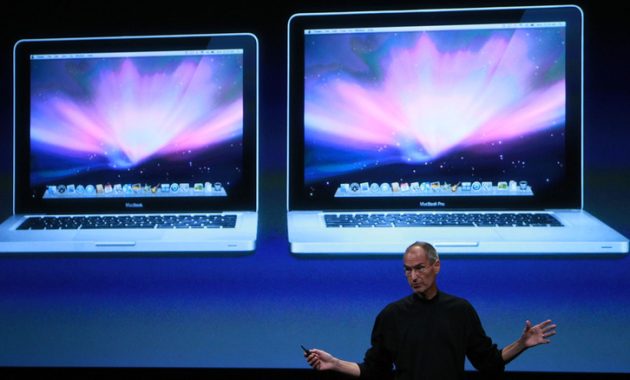
In 2008, Apple debuted the MacBook Pro and MacBook Air, both featuring unibody cases carved out from a single block of aluminum. The PC industry has never been the same since, as Apple’s unibody cases were stronger, lighter, and more attractive than anything seen on mainstream laptops at that point, and the company has continued to evolve that concept over the last two decades. PC makers struggled to replicate unibody cases for years mainly because Apple had a stranglehold on the global metal chassis supply chain. Eventually, Razer got close with its 2011 Blade gaming laptop, and Intel’s push for ultraportable Ultrabooks in the early 2010s led other PC makers to follow suit with designs like Dell’s XPS 13 and HP’s Envy 14.
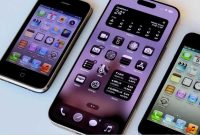
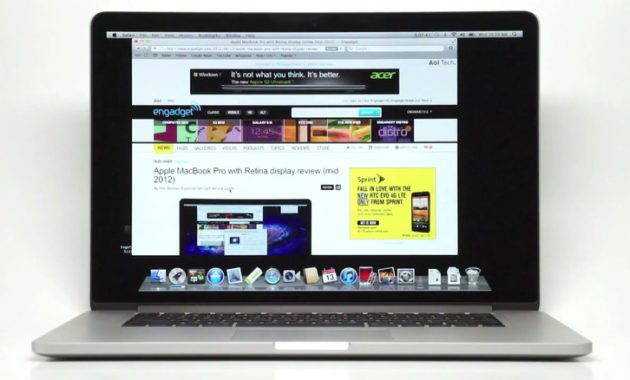
Apple’s first redesign of the 11-inch and 13-inch MacBook Air in late 2010 set a new standard for laptop shapes by introducing a wedge-shaped profile that provided more room for larger batteries and faster SSD storage drives. Both ASUS and Acer took clear inspiration from the MacBook Air for all of their ultraportables throughout the 2010s. With the 2012 MacBook Pro, Apple brought over the Retina Display concept originally debuted on the iPhone 4, featuring a resolution so sharp individual pixels were indiscernible. This started a new trend toward high-resolution laptops, pushing every PC maker to race for better screen technology. Ironically, Dell pioneered the razor-thin screen bezel design in the PC world, and it took Apple nearly a decade to seriously shave down its screen bezels.
The 2016 MacBook Pro introduced the Touch Bar while removing all legacy ports, leaving only four USB-C ports and a headphone connection. Apple doubled down on the minimalist design of the 12-inch MacBook, which had just a single USB-C port. This redesign made the MacBook Pro lighter and thinner than ever, but it left professionals out in the cold by omitting a built-in SD card reader, Type-A USB ports, and an HDMI connection. While the Touch Bar was divisive and rarely imitated by PC companies outside of ASUS, Apple’s decision to strip down ports gave rival manufacturers permission to do the same in premium systems like the XPS 13, HP Spectre, and Microsoft Surface laptops.
In 2020, Apple completely reshaped its computers around its own M1 chip, an Arm-based system-on-a-chip that proved more powerful and efficient than Intel’s x86 CPUs. Apple Silicon brought together CPU cores, GPU cores, RAM, AI NPUs, and I/O connections onto a single chip, making the M1 MacBook Air and MacBook Pro exceptionally fast with massive battery boosts. Apple followed up with the redesigned M1 Pro and M1 Max MacBook Pro models in 2021, bringing back an SD card reader and HDMI port, alongside the M2 MacBook Air in 2022. This prompted Microsoft to rally Qualcomm to build Copilot+ laptops, and inspired NVIDIA’s RTX Spark system-on-a-chip to power high-end AI-focused systems trying to match Apple Silicon performance.