

Introduction to Orange USB Ports
An orange USB port frequently serves as a visual indicator for specialized functionality, though it lacks strict enforcement through universal industry standardization. Home electronics and computing hardware often feature various port colors, with orange typically signaling an alternative capability compared to standard connections. Spotting an orange port on a desktop computer or peripheral often points toward an always-on charging option.
Hardware manufacturers deploy distinct color coding to highlight specialized capabilities without adhering to a rigid global rulebook. Consequently, an orange USB port does not automatically guarantee a uniform set of technical specifications across different brands and motherboard models.
Always-On Charging and Industry Standards
Hardware featuring an always-on charging option maintains power delivery through the internal power supply or battery even when the host computer is completely shut down. However, applying this assumption universally across all orange ports remains risky because electronics manufacturers do not follow a unified rule defining orange exclusively for powered shutdown charging.
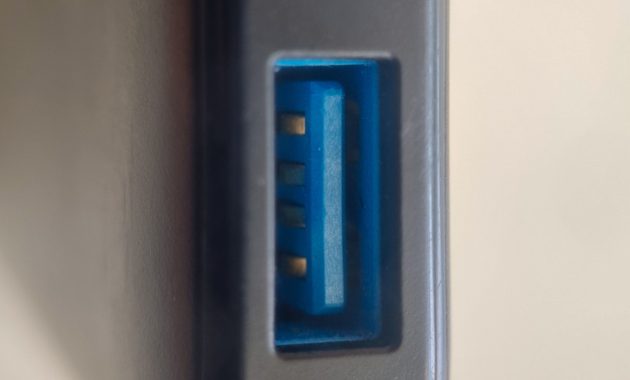
The coloration generally appears on the molded plastic insert located inside a rectangular USB-A socket. While certain producers designate these orange connections for persistent power delivery, others configure them to handle rapid data transmission simultaneously. Hardware specifications vary widely, meaning that verifying the actual behavior through official documentation is essential.
Manufacturer Variations and Unique Capabilities
Device makers frequently leverage color highlights to draw attention to unique hardware features rather than standardized charging wattages or speeds. Consulting the product documentation or online specifications page provides reliable data that a generalized color chart simply cannot guarantee.
Different engineering teams apply the same physical hue to represent completely disparate electrical or mechanical traits. For instance, Intel utilizes an orange USB port on specific NUC computing systems to deliver enhanced electrical current reaching up to 1.5 amps, surpassing the 900 milliamps supplied by standard blue ports on those same machines. Conversely, Advantech utilizes orange color inserts to designate high-retention USB connectors engineered with a gripping mechanism that requires fifty percent more withdrawal force than a conventional connector.
Comparing Orange and Blue USB Connections
Contrasting orange connections with blue ports reveals both similarities in data transmission rates and distinct operational boundaries. Both port varieties frequently align with the USB 3.0 standard, supporting maximum data transfer speeds up to 5.0 Gbps. Operating speeds remain identical between blue and orange connections during active computer use.
Divergence occurs primarily within power delivery categories, particularly when the host system shuts down and requires continuous external charging. Even blue connections lack absolute standardization, though the USB-IF recommends the shade specifically for SuperSpeed USB-A connections operating at 5 Gbps.
Hardware Limitations and Performance Factors
Maximizing the utility of an orange USB port requires compatible external accessories and appropriately rated cabling. Connected devices must support the advertised maximum thresholds, and the physical cable must be structurally and electrically capable of handling high-speed data or increased power delivery. Users requiring rapid power replenishment must confirm that the specific orange USB port delivers the necessary output, while data-intensive tasks require verifying that the port avoids becoming a performance bottleneck.