
Accessing reliable internet remains challenging for households located outside the reach of traditional cable and fiber infrastructure. Rural residents often face sluggish connection speeds, whereas urban areas routinely enjoy high-speed broadband. When wired options are absent, alternative choices like Starlink and 5G home internet serve as the primary pathways to faster connectivity.
Understanding the Core Technologies
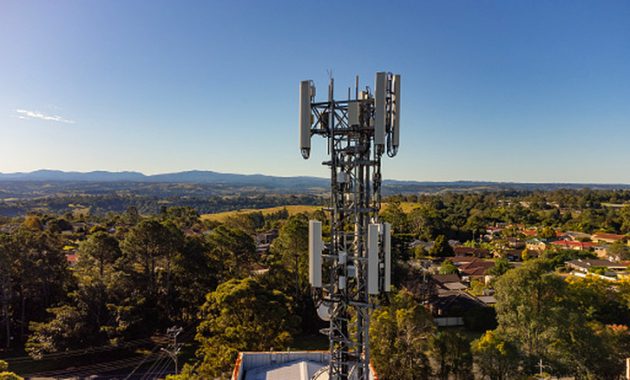
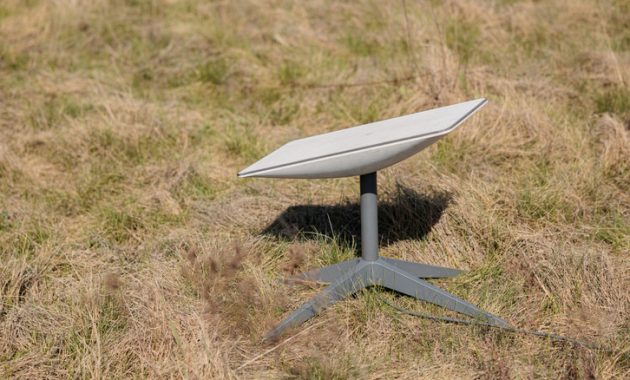
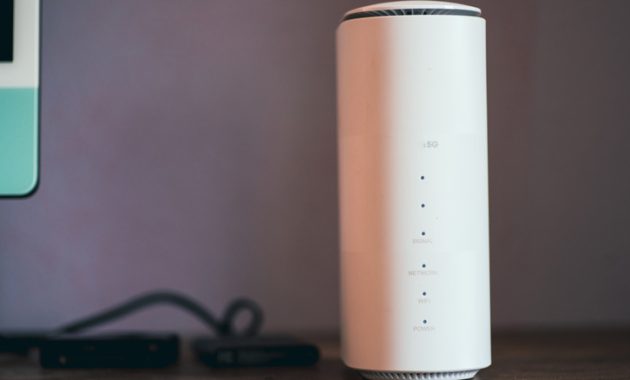
Cellular networks deliver 5G internet directly to mobile devices or dedicated home routers. Starlink operates differently by utilizing a satellite dish to connect residential locations to a broadband constellation in orbit. Performance varies significantly depending on local conditions, meaning a strong mobile signal can outperform satellite in certain regions, while satellite connectivity proves essential where cellular coverage fails.
Comparing Speed Benchmarks
Neither service provides a single universal speed benchmark. Starlink offers U.S. residential plans capped at 100 Mbps and 200 Mbps alongside its Residential Max tier, which targets download speeds of 400 Mbps or higher. T-Mobile’s 5G Home Internet plans list typical download speeds ranging from 170 Mbps to 498 Mbps.
Marketing figures represent averages rather than guaranteed local performance. Real-world testing conducted by PCMag on a Starlink Residential Max plan in rural Idaho recorded daily download averages between 145 and 170 Mbps. Earlier testing revealed a broader fluctuation, with speeds stretching from 20 Mbps to 250 Mbps due to variables like equipment placement and time of day.
Cellular network providers heavily dictate 5G performance based on accessible towers and frequency spectrums. Opensignal testing reported average downloads of 249 Mbps on T-Mobile and 184.3 Mbps on AT&T, while Ookla’s report recorded 314.38 Mbps for T-Mobile and 218.96 Mbps for Verizon.
Upload Speeds and Latency
Download metrics tell only part of the story when evaluating Starlink vs 5G speeds. T-Mobile estimates typical home internet upload speeds between 12 and 55 Mbps with a latency of 16 to 28 milliseconds. Starlink reports a median peak-hour latency of 25.7 milliseconds, demonstrating that satellite connections do not inherently suffer from massive transmission delays.
Coverage, Obstructions, and Reliability
Coverage dictates overall connection stability, preventing frustrating signal drops regardless of burst speeds. Cellular 5G relies on different frequency bands, where low-band signals travel farther and penetrate obstacles, mid-band balances speed and coverage, and high-band delivers extreme speeds that struggle against physical barriers.
Home internet 5G availability differs from mobile phone coverage because providers evaluate local tower capacity before approving unlimited home plans. Starlink targets remote properties lacking mobile coverage but requires an unobstructed view of the sky. The Starlink app features an obstruction checker to help users identify potential interference from trees or buildings prior to installation.
Environmental factors impact both technologies. Heavy rain or wind can occasionally slow down Starlink or cause outages, while network congestion during peak hours also affects users. Similarly, high-frequency 5G connections experience signal attenuation during severe weather events.
Pricing and Plan Structures
Comparing Starlink to dedicated 5G home internet provides a clearer picture than measuring against standard mobile phone plans that include voice and text bundles. T-Mobile home internet plans cost between $50 and $70 monthly plus taxes and fees. Starlink pricing starts at $55 for 100 Mbps, $85 for 200 Mbps, and $130 for the Residential Max tier, while unlimited roam plans cost up to $175.
Smartphone hotspots offer a cheaper alternative if mobile plans permit tethering, though carriers often apply separate limits to high-speed data sharing. Testing both services remains the definitive way to evaluate Starlink vs 5G speeds locally, aided by Starlink’s 30-day money-back guarantee.