
M6 MacBook Pro: Everything we know about Apple’s next laptop
Apple is expected to launch a new 14-inch MacBook Pro with the standard M6 chip in October 2026. However, unlike previous generations, the M6 isn’t expected to be joined by more powerful M6 Pro and M6 Max versions.
Apple currently offers three processor options across the MacBook Pro range: the standard M5 in the entry-level 14-inch model, and the more powerful M5 Pro and M5 Max in the 14-inch and 16-inch models. The standard M6 is expected to replace the M5 almost exactly a year after its October 2025 launch.
According to Bloomberg’s Mark Gurman, Apple is preparing to announce the entry-level M6 MacBook Pro in late October, potentially ahead of its October 28 media event. The new model is expected to retain the existing design, with the faster processor providing the main upgrade.
The more substantial changes, including an OLED touchscreen and redesigned chassis, are reportedly reserved for premium MacBook Pro models that will continue to use M5 Pro and M5 Max chips. Rather than introducing M6 Pro and M6 Max processors, Apple is reportedly fast-tracking the M7 generation, with M7 Pro and M7 Max models expected in fall 2027.
That creates an unusual buying decision: choose the standard M6 MacBook Pro, opt for one of the redesigned touchscreen models with M5 Pro or M5 Max chips, or wait for the next generation of professional processors in 2027. Here’s what the latest reports suggest.
M6 MacBook Pro release date: When will it launch?
Bloomberg’s Mark Gurman reported that Apple will announce the M6 iMac on October 27, 2026. On October 19, Apple announced a media event, dubbed “Pro and Tell” on October 28, 2026 that will feature the touchscreen MacBook Pro, but could mention the M6 model. Bloomberg’s Mark Gurman reported on October 8 that Apple is planning to announce the M6 MacBook Pro on October 27, 2026. According to the report, the launch will include an online video presentation and an in-person component for the press.
More recently, reports have pointed to a media experience in Los Angeles on Wednesday, October 28, a day after Gurman’s originally reported announcement date. Apple could still unveil the new MacBook Pro on October 27 before giving invited journalists an opportunity to see the hardware the following day.
Then on Monday October 19, Apple’s Greg Joswiak posted on X to say: “Can’t wait to pro and tell next week.” Indicating that the MacBook Pro will be updated in the week of 26 October.

The M6 MacBook Pro is expected to launch alongside the first OLED touchscreen MacBook Pro, an M6 iMac, and an updated iPad mini. The new entry-level MacBook Pro is expected to retain its 14-inch display and existing design, with the M6 chip providing the main upgrade.
The late October announcement would fit Apple’s recent release pattern. The M5 MacBook Pro arrived in October 2025, while its predecessor launched in November 2024.
Following the October 27 or 28 announcement, Gurman has indicated that the new MacBook Pro will start shipping on November 6. Ongoing memory and storage chip shortages could still affect availability or delivery times, and these supply constraints have already contributed to price increases across Apple’s Mac lineup.
M6 MacBook Pro: Chip details
Apple has introduced the M6 chip in the Mac mini, giving us a clear idea of what to expect from the upcoming MacBook Pro. The M6 is Apple’s first M-series chip built using TSMC’s 2nm manufacturing process, bringing improvements to CPU, GPU, and AI performance.
The M6 in the Mac mini features a 12-core CPU and 12-core GPU, up from the M5’s 10-core CPU and 10-core GPU. It also introduces Neural Accelerators in every GPU core and a dual 16-core Neural Engine, boosting performance in AI workloads. The M6 MacBook Pro is expected to benefit from the same architectural improvements, making it particularly appealing to users running AI-powered applications and local AI models.
The Mac mini also provides an indication of what to expect from memory bandwidth. Earlier rumors suggested the M6 could reach 200GB/s, but the M6 Mac mini delivers up to 170GB/s with 24GB or 32GB of unified memory. The 16GB configuration offers 153GB/s, matching the M5, and this relatively modest increase could limit the performance gains delivered by the redesigned GPU.
Our analysis suggests that the additional GPU cores, higher clock speeds, and architectural improvements help the M6 deliver gains of 20 percent or more in 3D graphics performance. However, memory bandwidth limitations mean those gains aren’t as substantial as the additional processing power might suggest.
M6 MacBook Pro: Other specifications and features
The M6 MacBook Pro is expected to retain the existing 14-inch design, with few changes beyond the processor upgrade. According to Bloomberg’s Mark Gurman, the display, chassis, and other hardware are likely to remain substantially unchanged from the M5 MacBook Pro.
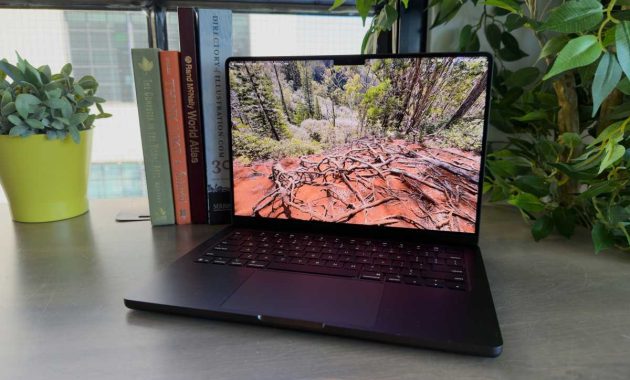
That means buyers shouldn’t expect an OLED display or touchscreen on the standard M6 model. Those features are reportedly reserved for Apple’s redesigned premium MacBook Pro models, which are also expected to debut on October 27.
The standard 14-inch MacBook Pro will move from the M5 to the M6 processor while retaining its familiar design. It should appeal to buyers who want the newer chip but don’t need a redesigned laptop.
The higher-end MacBook Pro models, meanwhile, are expected to introduce an OLED touchscreen, a reportedly thinner and lighter chassis, and potentially an iPhone-style Dynamic Island camera cutout. Despite these upgrades, the redesigned models will reportedly use M5 Pro and M5 Max chips rather than M6 Pro and M6 Max processors, reflecting Apple’s decision to skip the M6 Pro and M6 Max generation and focus development resources on the M7 family expected in 2027.
Although the standard M6 is a newer chip, the M5 Pro and M5 Max are designed for more demanding professional workloads, so buyers shouldn’t assume the M6 MacBook Pro will be the more powerful option. The choice could therefore come down to whether buyers prioritize the latest chip at a lower price or a more powerful MacBook Pro with a redesigned display and chassis.
| Feature | M6 MacBook Pro | OLED touchscreen MacBook Pro |
|---|---|---|
| Expected announcement | October 27, 2026 | October 27, 2026 |
| Processor | M6 | M5 Pro / M5 Max |
| Screen sizes | 14-inch | Premium MacBook Pro sizes; expected 14- and 16-inch |
| Display | Existing non-OLED display | OLED |
| Touchscreen | No | Yes |
| Design | Existing chassis | Thinner, lighter redesign |
| Price | From around $1,999 | Higher pricing expected |
M6 MacBook Pro: Price
We haven’t heard any reports about the price of the entry-level M6 MacBook Pro, but we can look at recent price history to get an idea. When the M5 MacBook Pro was released in 2025, its starting price was $1,599, but Apple bumped it to $1,699 when the M5 Pro and Max models arrived and increased starting storage to 1TB. This past June, however, Apple raised the price to $1,999 due to supply chain constraints that are not going away anytime soon.
During Apple’s Q3 2026 financial announcement in July, Apple CEO Tim Cook and CFO Kevan Parekh made it a point to explain that supply chain constraints will affect production costs for months to come. Parekh noted that the projected supply constraints in the September quarter affect iPhone, Mac, and iPad production.
The existing M5 MacBook Pro starts at $1,999/£1,999 following the price increases introduced in June 2026, and the M6 could retain that starting price. However, ongoing memory and storage shortages continue to affect manufacturing costs, meaning another price increase is possible.
The redesigned OLED touchscreen models are expected to carry a premium over the existing MacBook Pro lineup, making the standard M6 MacBook Pro a potentially more affordable alternative for buyers who want a new laptop without paying extra for a redesigned display and chassis.
Should you wait for the M6 MacBook Pro?
With Apple’s next MacBook Pro announcement reportedly just days away, waiting until the end of October should provide a clearer picture of the M6 MacBook Pro performance, pricing, and availability while potentially bringing discounts on the outgoing M5 model.
Wait for the M6 MacBook Pro if you plan to buy the standard 14-inch laptop and don’t urgently need a new device, as the M6 provides improved CPU, GPU, and AI performance over the M5. Consider the OLED touchscreen MacBook Pro if you want a more substantial hardware upgrade like an OLED touchscreen and a thinner design, keeping in mind those models use M5 Pro and M5 Max processors. Buy an M5 MacBook Pro now if you need a laptop immediately or find a substantial discount, and wait for the M7 MacBook Pro if you want an OLED panel without a touchscreen in 2027.