
Apple executives took center stage on Wednesday to unveil the company’s latest hardware lineup, headlined by the foldable iPhone launch. Newly minted CEO John Ternus led the presentations, showing off the company’s newest iPhones and Apple Watches. The primary attraction of the event was the iPhone Duo, marking Apple’s entry into the foldable smartphone market. Alongside this device, Apple also debuted the iPhone 18 Pro lineup. The base iPhone 18 may not arrive until the spring, when Apple is expected to reveal the iPhone Air 2 and iPhone 18e in a shakeup of the usual release strategy.
Apple also unveiled its latest wearables, consisting of the Apple Watch Series 13 and the Apple Watch Ultra 4, while updating its AirPods line. Heading into the event, users knew these devices would debut alongside Siri AI. This revamped, Gemini-powered voice assistant serves as the heart of iOS 27, iPadOS 27, macOS 27, watchOS 27, and related operating systems. Older devices compatible with Apple Intelligence will support Siri AI, but Apple designed these latest devices in concert with the assistant. The public version of iOS 27 brings Siri AI to compatible iPhones on September 14.
Siri AI will be available in English only at first, with support for French, Japanese, Korean, Portuguese, and Spanish arriving in October. Note that Siri AI is delayed indefinitely in the EU and will not be available in China, mirroring restrictions placed on Apple Intelligence. Meanwhile, Apple has increased the prices of older iPhones by $100 due to ongoing memory and storage supply issues. Let’s dive into everything Apple announced at its Surprise and Shine iPhone event.
The iPhone Duo: Apple’s First Foldable Phone
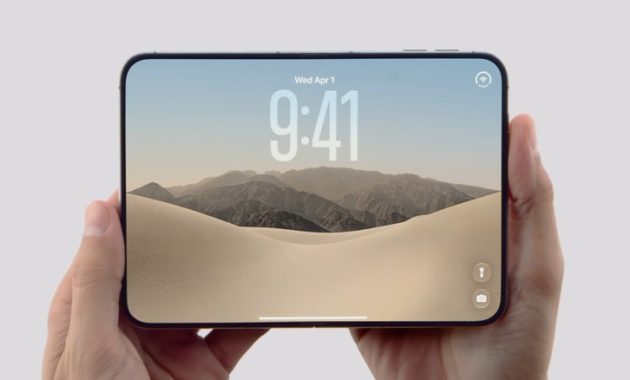
The main attraction of this event was the long-rumored foldable iPhone. It was hardly a secret that Apple was working on such a device, especially after third-party companies started selling cases for the phone earlier in the week. The foldable is called the iPhone Duo, moving away from previous expectations that Apple would call it the iPhone Ultra. While Duo may lack excitement, it remains a logical naming choice.
The book-style format Apple has opted for allows for a wide main display akin to a tablet. Essentially, it provides iPad mini-style utility directly in your pocket. Both displays feature Apple Pencil support. The main display features a 7.6-inch Super Retina screen, which is quite a bit smaller than the 8.3-inch screen on the iPad mini, yet it remains the biggest display ever placed on an iPhone. An exterior screen measures 5.4 inches.
When open, the iPhone Duo is the thinnest iPhone to date at 0.21 inches or 5.2 mm. Folded up, it measures 0.44 inches or 11.3 mm thick and weighs 8.96 ounces or 254 grams. The main screen introduces an under-display camera to the iPhone lineup, while the exterior display utilizes a hole-punch cutout for its camera. Speakers sit positioned on the top and bottom of the device, which is available in star white and night sky color options.
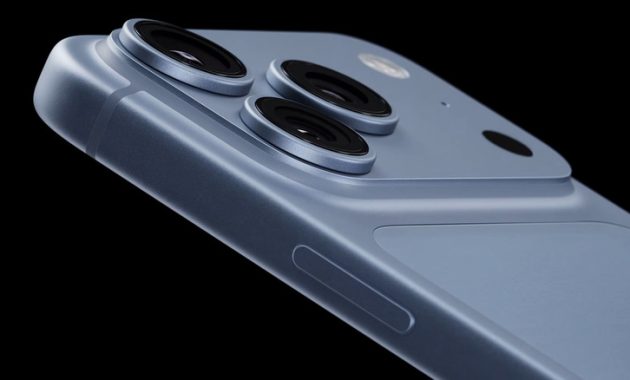
The iPhone Duo runs on the same A20 Pro chip found in the iPhone 18 Pro models. It operates as an eSIM-only device, a decision Apple made to allocate more space for the battery. Apple reports that the iPhone Duo offers 44 hours of video playback on the external screen. Utilizing both displays equally yields around 24 hours of use before charging, while five minutes of wired charging provides five hours of video-watching time on the external screen.
Smartphones with foldable displays have existed for years, but Apple typically delays entering a category until confident in getting the mechanics right. The company ensured it cracked the hinge durability puzzle before proceeding. Reports earlier in the year suggested an engineering hitch might cause a delay, but that did not occur. The iPhone Duo features an IP68 rating for water and dust protection, carbon fiber support plates in the hinge, a titanium frame and hinge cover, and a nano-texture display with a scratch-resistant coating.
The device lacks a dedicated telephoto camera, utilizing instead a 48MP main camera and a 48MP ultrawide camera. The foldable offers unique camera tricks, such as propping itself up without a tripod, showing the subject the framing of a shot while lining it up, and a FaceTime feature allowing people on both sides of the device to join the conversation. It lacks a dedicated camera control button and an Action Button. Face ID is also absent; Apple built the Touch ID sensor into the side wake/sleep button much like on iPads, while allowing users to unlock the device using an Apple Watch.
On the software side, users can multitask on the main screen by running two apps at once or two instances of the same application. Apple has shifted essential controls, such as the Home Screen dock and playback buttons for Apple Music, to the side of the external screen to free up vertical space. All proprietary apps are optimized for the dual-display device, and third-party partners like Netflix allow users to browse clips on the smaller screen before watching on the main display. StandBy mode works on both displays, and the iPhone Duo supports MagSafe and Qi2 charging.
The iPhone Duo starts at $1,999 for a 256GB storage version, with 512GB, 1TB, and 2TB options available. The 2TB tier costs $3,199. Pre-orders open on October 16, and the device ships on October 23. Official cases in navy blue or sand cost $79, while a folio case with a kickstand costs $129 in navy blue and taupe.
iPhone 18 Pro and iPhone 18 Pro Max
New Apple CEO John Ternus kicked off the presentation by positioning the iPhone as an intelligent personal hub before introducing the iPhone 18 Pro and iPhone 18 Pro Max. The 18 Pro Max delivers the longest battery life of any iPhone to date with 45 hours of video playback, while the iPhone 18 Pro matches the 17 Pro Max with around 36 hours of video playback. These figures apply to eSIM-only variants, which house larger batteries than models featuring physical SIM slots that lose two hours of video playback time.
Recharging to 50 percent capacity takes 15 minutes over a wired connection, and a five-minute charge yields seven hours of video-watching time on the 18 Pro Max. These models run on the A20 Pro chipset, a 2nm chip featuring a six-core CPU with four efficiency cores and two desktop-class super cores that operate 20 percent faster than the previous generation. The chip includes a seven-core GPU and a 32-core neural engine, delivering up to 40 percent improved graphics performance and 50 percent more memory bandwidth than the A19 Pro.
The latest phones include Apple’s N1 chip supporting Wi-Fi 7, Bluetooth 6, and Thread, alongside the new C2 modem. Apple states the C2 delivers faster uploads compared to the C1X while consuming 15 percent less energy, and it supports mmWave in the US. A next-generation vapor chamber with three times the surface area of the iPhone 17 Pro manages heat during intensive tasks like processing Siri AI prompts. The design incorporates 80 percent recycled stainless steel and graphite, offering a 40 percent performance improvement over past cooling systems.
The iPhone 18 Pro features a new 48MP fusion main camera with a variable aperture supporting 4K and Dolby Vision HDR for timelapse recordings. Users can apply cinematic effects after capture and use pro controls to customize the experience. Apple is introducing Apple Reference Image, built into a camera sensor to verify photo authenticity, alongside support for the SynthID watermarking standard for AI-modified or generated images. The Dynamic Island is smaller and can display three live activities simultaneously.
Prices for the iPhone 18 Pro models increase by $100 over their predecessors due to memory and storage costs. The iPhone 18 Pro starts at $1,199, and the 18 Pro Max starts at $1,299. Pre-orders open on Saturday, September 12, with availability on September 18 in black, silver, glacier, and a new burgundy color option. eSIM-only versions launch in the US, Bahrain, Canada, Guam, Japan, Kuwait, Mexico, Oman, Qatar, Saudi Arabia, the UAE, and the US Virgin Islands.
Apple Watch Series 12 and Apple Watch Ultra 4
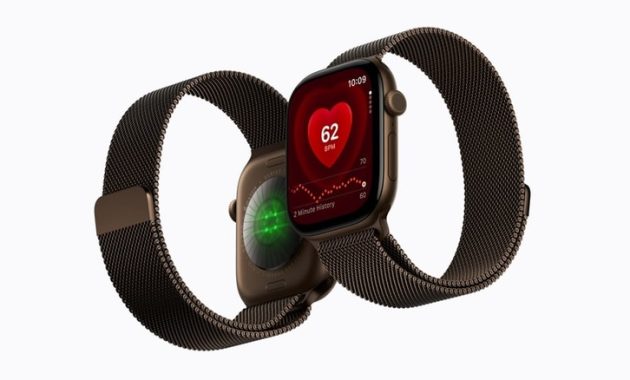
Apple refreshed its smartwatches, starting with the Apple Watch Series 12 and its upgraded internals. The wearable improves heart rate sensing capabilities by checking the heart rate every five seconds, enabling a new complication with detailed live data and a Readiness score. Battery life matches the Series 11 at 24 hours, but charging speeds increase so that a 15-minute charge provides 12 hours of power. The device runs on an S11 chip.
The primary new capability is Audio Intelligence, which detects environmental sounds like alarms and a crying infant to assist individuals with hearing impairments. The feature transcribes the last 15 seconds of a conversation, Siri summarizes chats, and Shazam runs in the background to identify nearby music. Apple states recordings are not stored and audio remains private, with all Audio Intelligence features remaining optional. The Series 12 starts at $399 in 42mm and 46mm sizes, including a returning ceramic option, with pre-orders opening immediately and shipping on September 18.
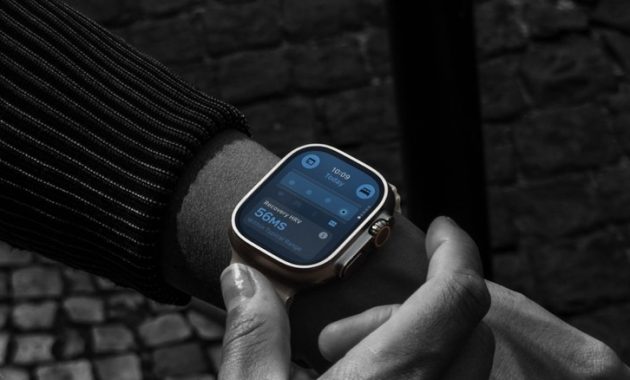
The Apple Watch Ultra 4 extends battery life up to 50 hours in everyday use and 84 hours in low power mode, with a 15-minute charge adding up to 18 hours. It runs on the S11 chip and supports Audio Intelligence. Both watch lineups include a Hermès variant featuring an ocean depths watch face and a Grand H titanium band with a built-in extension mechanism for wet suits. The Apple Watch Ultra 4 starts at $799, with pre-orders opening in over 50 regions and shipping on September 18.
AirPods 5 and Future Product Expectations
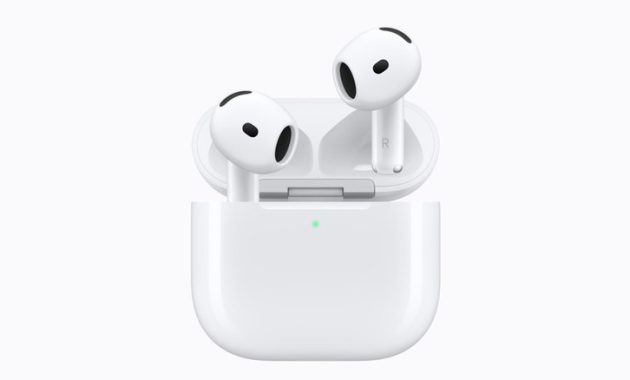
The AirPods 5 arrive in two configurations. An entry-level $129 model features open-ear active noise cancellation removing up to 50 percent more external noise than the AirPods 4, a natural Transparency mode, and improved IP57 dust, sweat, and water resistance. It offers up to four hours of listening time with ANC enabled and 20 hours total with the charging case. A $149 option adds a wireless charging case compatible with Apple Watch chargers and on-stem volume control, extending ANC listening time to five hours and total battery life to 22 hours. Both options open for pre-order immediately and ship on September 18.
Several anticipated products did not appear at the event. Apple typically saves iPad announcements for later in the fall, with reports suggesting an OLED iPad mini is in development. Upcoming Macs will also require a longer wait following recent Mac mini and Mac Studio refreshes. Leaks indicate future AirPods Pro models could incorporate cameras to capture still images for Visual Intelligence, providing accessibility benefits for users with vision impairments. Apple’s expected smart home hub display was also absent, though a dedicated smart home event in coming months may showcase the display alongside revamped Apple TV and HomePod models.